How Gulf Coast Salt Air Destroys Your Locks (And How to Stop It)
Salt air and Florida humidity corrode locks faster than you think. Learn how to maintain your locks on the Gulf Coast and avoid costly replacements.
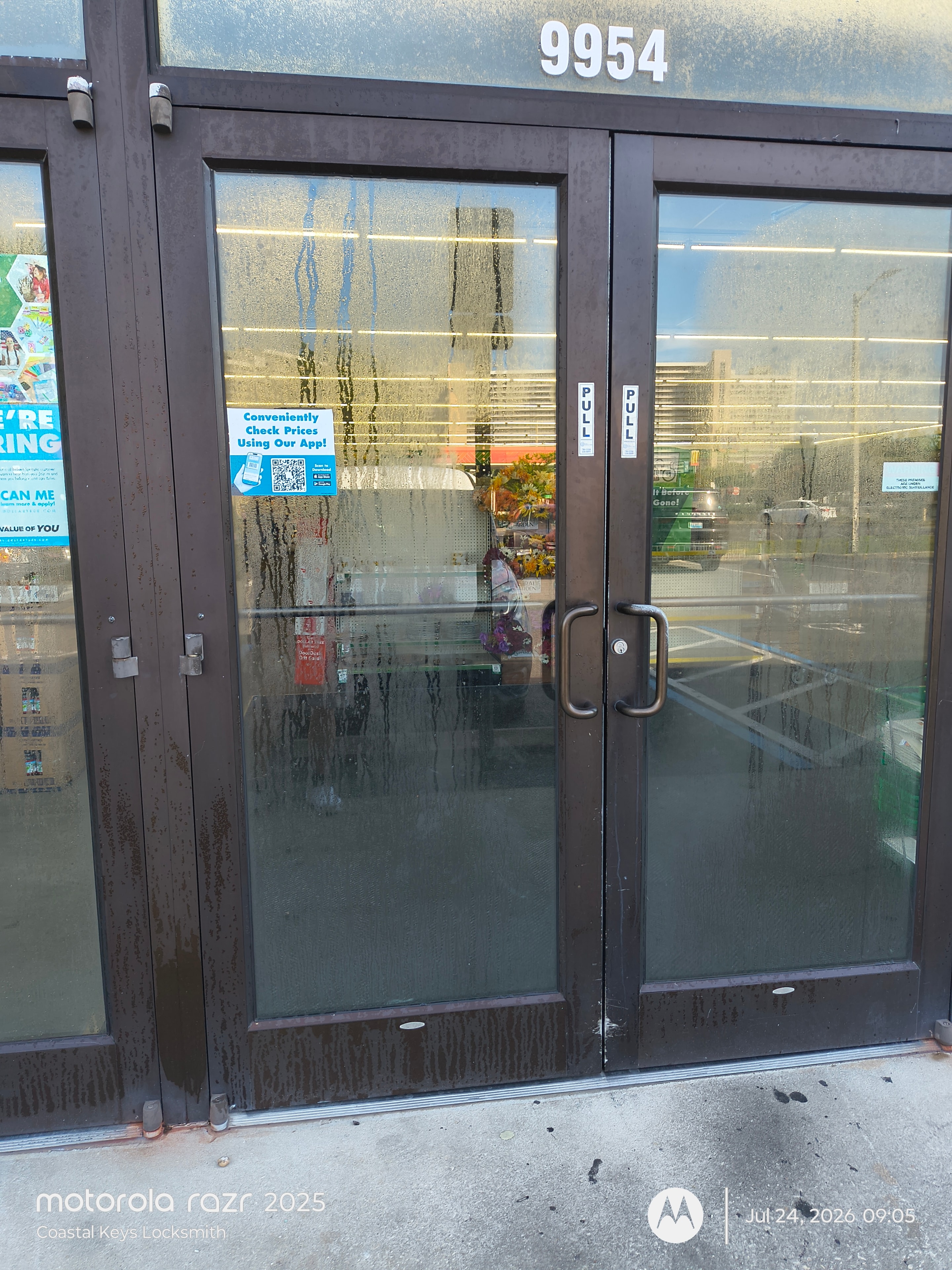
If you live anywhere near the Gulf of Mexico — Panama City, Lynn Haven, Panama City Beach, or down the coast toward Apalachicola — your locks are under attack every single day.
Salt air, high humidity, and Florida's relentless heat are a brutal combination for door hardware. Most homeowners don't think about their locks until one stops working. By then, the damage is already done.
Here's what's happening to your locks right now, and exactly what you can do to stop it.
Why Gulf Coast Air Is So Hard on Locks
Standard residential locks are made from brass, zinc alloy, or steel. All of these metals react to salt and moisture over time. In a dry inland climate, a quality deadbolt might last 20–30 years with zero maintenance. On the Gulf Coast, that same lock can start corroding in as little as 2–3 years if you ignore it.
Here's what salt air corrosion does to a lock:
- Stiffens the keyway — salt crystals build up inside the cylinder, making it harder to insert and turn your key
- Seizes the deadbolt throw — the bolt mechanism corrodes and stops extending or retracting smoothly
- Damages the finish — pitting and rust on the exterior make locks look worn and signal to burglars that a home isn't well-maintained
- Weakens the internal springs — small springs inside the lock cylinder lose tension and eventually fail
The closer you are to the water, the faster this happens. If you're in Mexico Beach, Apalachicola, or right on Panama City Beach, you're in the highest-risk zone.
How Often Should You Maintain Your Locks?
For Gulf Coast homeowners, a good rule of thumb is:
- Every 6 months — light cleaning and lubrication
- Once a year — full inspection of all exterior locks, deadbolts, and door hardware
- After a major storm — inspect immediately; wind-driven salt spray accelerates corrosion significantly
If you haven't touched your locks in over a year and you live near the water, it's worth doing a quick check this week.
Step-by-Step: How to Maintain Your Locks
You don't need to be a locksmith to do basic lock maintenance. Here's what to do:
1. Clean the Keyway
Use a can of compressed air to blow out dust, debris, and salt buildup from the keyhole. Do this before applying any lubricant — lubricating a dirty lock just traps the grit inside.
2. Use the Right Lubricant
This is where most homeowners go wrong. Do not use WD-40 on locks. WD-40 is a water displacer and degreaser — it will actually strip the existing lubrication from your lock cylinder and attract more dirt over time.
Instead, use one of these:
- Graphite powder — the gold standard for lock cylinders; dry, clean, and long-lasting
- Teflon-based lubricant (PTFE) — great for both the keyway and the bolt mechanism
- Silicone spray — works well on the bolt and strike plate
Apply a small amount to your key, insert it into the lock, and work it in and out several times. Then turn the key through the full range of motion to distribute the lubricant.
3. Lubricate the Bolt and Strike Plate
The deadbolt throw and the strike plate on your door frame also need attention. Apply a thin coat of silicone spray or graphite to the bolt itself and the inside of the strike plate. This keeps the bolt sliding smoothly and reduces wear on both surfaces.
4. Check the Door Alignment
A misaligned door is one of the most common reasons locks wear out prematurely. If your door is sagging or swollen from humidity, the bolt has to work harder every time you lock and unlock it. Check that your door closes evenly and that the bolt lines up cleanly with the strike plate. If it doesn't, the hinges may need adjustment — or the door frame may have shifted.
5. Inspect the Exterior Finish
Look at the outside of your lockset and deadbolt. If you see pitting, rust spots, or the finish is flaking, that's a sign corrosion has already started working its way inside. A corroded exterior is a warning sign — don't wait until the lock fails completely.
When Maintenance Isn't Enough: Rekeying vs. Replacing
Sometimes a lock is too far gone to save with maintenance. If your key is difficult to turn even after lubrication, if the deadbolt sticks or won't fully extend, or if the lock feels loose in the door, it's time to call a locksmith.
At that point, you have two options:
Rekeying changes the internal pins of your lock so your old keys no longer work and new keys are cut. It's faster and less expensive than full replacement — and it's a great option when the lock hardware itself is still in good shape but you want new keys (after moving into a new home, for example).
Lock replacement makes sense when the hardware is corroded, damaged, or outdated. Upgrading to a higher-grade deadbolt — especially one with a corrosion-resistant finish like satin nickel or marine-grade brass — is a smart investment for Gulf Coast homes.
Not sure which one you need? Our lock rekeying service and residential locksmith team can assess your locks and give you an honest recommendation.
The Best Lock Finishes for Coastal Florida
If you're replacing locks, finish matters more on the Gulf Coast than anywhere else. Here's how common finishes hold up:
| Finish | Corrosion Resistance | Notes |
|---|---|---|
| Polished brass | Poor | Tarnishes and pits quickly near salt water |
| Satin nickel | Good | Popular choice; holds up well in most coastal areas |
| Oil-rubbed bronze | Good | Attractive and reasonably corrosion-resistant |
| Marine-grade stainless | Excellent | Best for waterfront properties; higher cost |
| Matte black | Moderate | Looks great but requires quality coating to resist salt |
For most Bay County homeowners, satin nickel or oil-rubbed bronze is the sweet spot between cost and durability. If you're right on the water in Panama City Beach or Mexico Beach, consider stepping up to marine-grade hardware.
Don't Forget Your Garage and Outbuildings
Most homeowners focus on their front and back door locks — but garage side doors, storage sheds, and workshop buildings are just as vulnerable to salt air corrosion. These locks often get zero maintenance for years and are frequently the weakest point of entry on a property.
Add them to your maintenance rotation. A corroded padlock on a storage shed is an easy target.
We Serve the Entire Gulf Coast
Coastal Keys Locksmith provides residential lock maintenance, rekeying, and replacement across Bay County and the surrounding area. Whether you're in Panama City, Lynn Haven, Panama City Beach, or further down the coast in Mexico Beach, Port St. Joe, or Apalachicola — we know what Gulf Coast conditions do to locks and we know how to fix it.
If your locks are stiff, sticky, or showing signs of corrosion, give us a call at (850) 225-1529. We're available Monday through Sunday, 6 AM to 9 PM.
Don't wait until a lock fails at the worst possible moment. A little maintenance now saves a lot of headache later.
Explore Topics
Written by
DJ – Coastal Keys Locksmith
Content creator and writer sharing insights and stories.